Author Archives: CareHelps

Stone Brook – A Place to Call Home

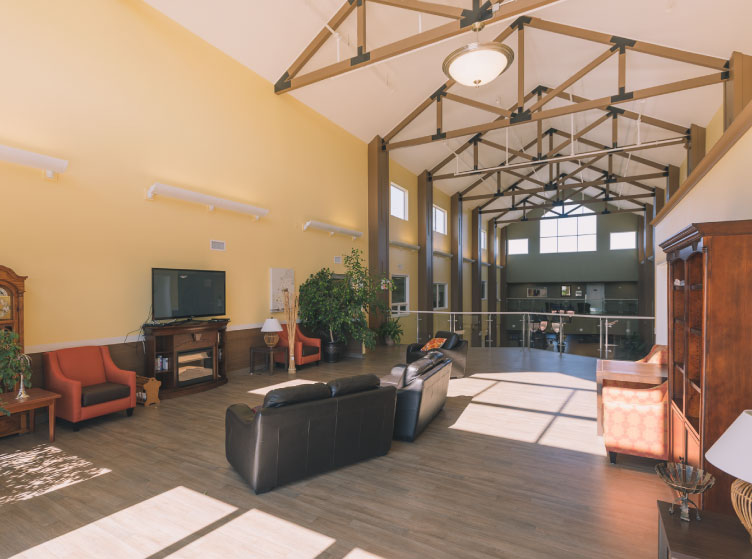
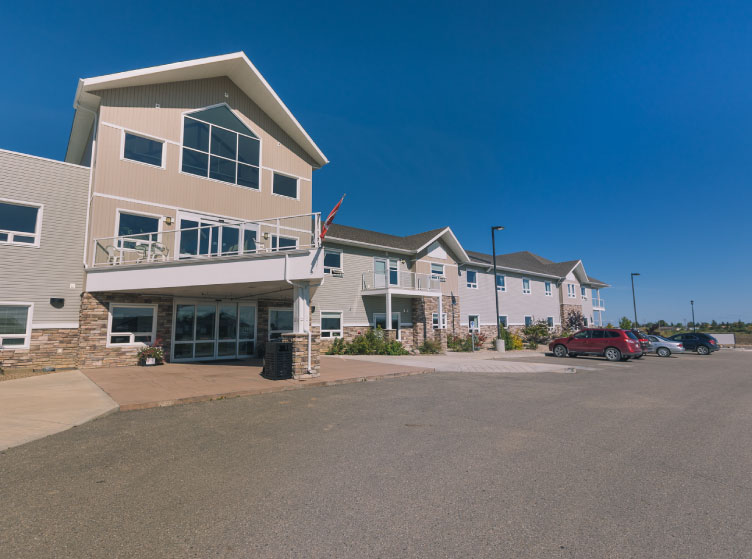
Stone Brook isn’t just a building; it’s a space intentionally designed for relaxation, belonging, and a vibrant community life.

The warm atmosphere of Stone Brook begins before you even step through the front doors. You’re first greeted by a large green space that is home to our community garden, where every spring residents plant a variety of vegetables, fruits and flowers.

The building’s large windows, designed to filter in natural light, reflect the transparency, strength, and community spirit that built this project from the ground up. From the sun-drenched grand terrace to the cozy, light-filled common areas, Stone Brook was built to be a place where your past is respected, and your future is celebrated.

You can read more about our beginnings here.

What We Offer

Dementia Supports

Key services are provided to those individuals who AHS has assessed as requiring support at a Continuing Care Home Type B Secure Space: formerly designated supportive living 4 – Dementia (DSL4D). 

Personal Space

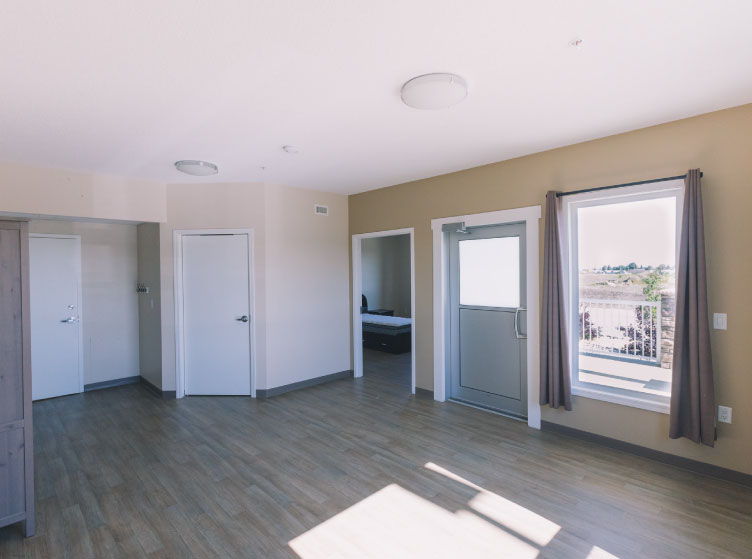
Each cottage has large bedrooms (the smallest is 385 sq ft.), each with a private bathroom that contains an accessible shower, toilet and sink. 

Specialized Medical Care

Residents who call Stone Brook home have around-the-clock care by Certified Health Care Aides as well as Licensed Practical Nurses who have specialized in-house training, as well as training provided by Alberta Health Services in accordance with the Continuing Care Health Service Standards.

What Makes Us Special

Staying Active

Daily recreational activities are planned in advance with a calendar placed in each cottage, letting residents know when and where the activities are happening. 

Comfort and Community

Stone Brook is home to hard-working Comfort Cats that take their job very seriously. We are also fortunate to have a Community Garden that residents share. 

Quality of Life

Stone Brook allows you the opportunity to “age in place” with supports while remaining in a residential setting.

We are committed to supporting you in a respectful and caring community while fostering Quality of Life that includes family and friends.

Testimonials

I really like living here. I would say that we are all very well cared for, there are good and hot meals served to us, a wide variety of recreation activities, and the building is beautiful. I especially love sitting in the upstairs lounge in front of the big windows reading my book.

It is a safe space for me to be. The staff are all really good at being inclusive and kind, but still letting me be independent. I am thankful for the relationships that I have with the other people that live here too. The staff are always very welcoming, kind, and humorous.

Ready to see it for yourself?

Whether you’re looking for a new home for yourself or exploring options for a loved one, we invite you to step inside and feel the warmth of our community firsthand. Walk through our gardens, stand on the terrace, and see how the vision started back in 2006 has come to life.

Contact Connecting Care to book a tour.

Join Our Community

As an Alberta Health Services (AHS) licensed facility, the process for becoming a resident begins with contacting Home Care (North Zone). An assessment is completed to determine the appropriate level of care. If Continuing Care Home Type B or Type B Secure (dementia) care is required, the referral is forwarded to AHS Placement for review.

Once approved, the individual and/or their legal decision-maker may select up to three preferred locations. The referral is then shared with those sites. If Stone Brook is selected, the team will connect with the individual and their family to begin the intake process, complete the required documentation, and coordinate a mutually agreed-upon move-in date.

Contact the North Zone Home Care team to start the process. 
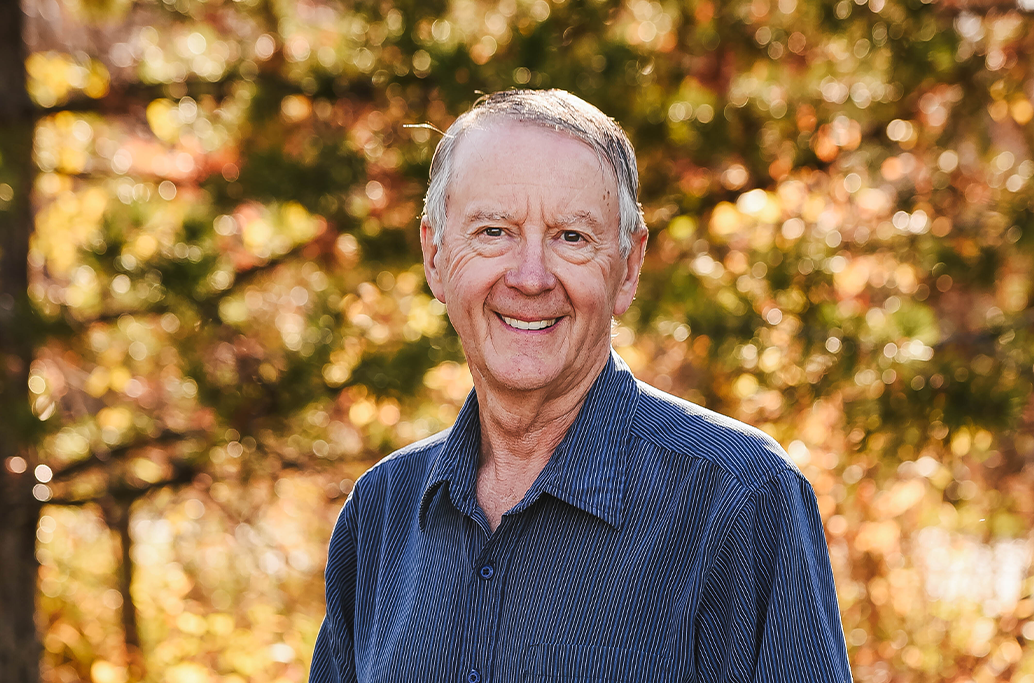

Shannon Websdale, Board Member

An End of a Care Era

With heartfelt gratitude, we share that after decades of dedicated leadership and service to the organization, Shannon Websdale will be stepping down from the Care Board of Directors.

Shannon was appointed Executive Director of our organization in 1992 when it was known as the North Peace Community Living Society. During his time as ED and CEO, he worked diligently to provide quality services for individuals with disabilities in the Peace Region.

In 1995, we received Accreditation Certification through the Alberta Association of Rehabilitation Centers. At the time, accreditation was not required for funding – it was a voluntary process. “I believed my role as CEO was to create the conditions for staff to excel in their role, the expected outcome being quality services,” reflected Websdale.

With Shannon at the helm, the organization experienced significant growth, expanding into Grande Prairie in 2003 and transitioning from a Society to an incorporated company, Accredited Supportive Living Services Limited, in 2006. That same year Behavioural specialists were hired as the organization began offering behavioural support. Stone Brook, the Supportive Living Complex in Grimshaw, opened in 2014. And in 2016, Saskatoon Lake, a facility designed to assist Individuals with complex behavioural needs, opened.

“Being CEO of *ASLS was a dream job – that every day I had the opportunity to make a difference in the lives of people,” said Websdale. In 2015, he semi-retired and took up his position as Chairman of the Board of Directors. Over the years, his role on the Board changed, but his commitment never wavered.

*In 2019, the organization rebranded under the name Care Human Services.

“Shannon has been instrumental in guiding this organization through important stages of growth and change. His clarity of vision, thoughtful counsel, and unwavering support strengthened our board and helped position the organization for a sustainable future. We thank him sincerely for the leadership and integrity he brought to his role.” –  Nivin Markose, Care Executive Director


“Through vision, integrity, and dedication, Shannon transformed CARE from a small group of people into a thriving, impactful organization. As both CEO and President of the Board, his leadership not only propelled our success but also shaped our core values. We are grateful for the foundation laid by the Websdale family and the legacy they leave behind.” – Dan MacNeil, Care Board President

We are happy to share that Shannon will not be leaving us entirely, but will be staying on in a construction/maintenance role with the organization.

Care and SCOPE Strengthen Collaboration Through Working Alliance

Over the past year, Care and the Calgary SCOPE Society have been exploring opportunities to strengthen our collaboration, with the shared goal of enhancing client outcomes and implementing best practices across both organizations.

Following a series of thoughtful discussions between leadership teams, both organizations have agreed to move forward with a working alliance model rather than a formal merger. This approach better reflects our shared commitment to clients, employees, and communities, while allowing each organization to maintain its unique strengths and identity.

The decision recognizes that while the original merger timeline is no longer feasible, the progress made together has laid a strong foundation for ongoing partnership and collaboration. Both boards are now engaging in continued dialogue to refine the structure and direction of this alliance.

Through this partnership, Care and SCOPE will continue to work closely on several shared priorities.This alliance represents a meaningful step forward that centers on collaboration, learning, and a shared dedication to supporting the people we serve.

Announcement of Merger with SCOPE

SCOPE and Care: Growing Together

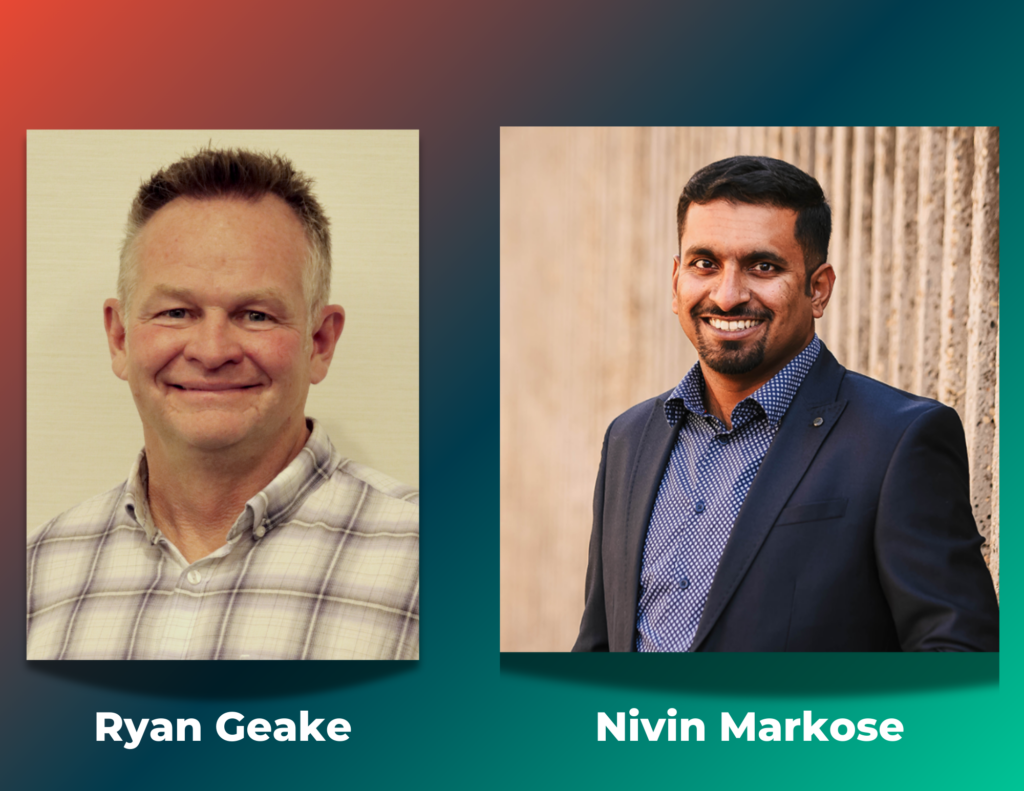
Ryan Geake, CEO of Calgary SCOPE Society

The merger with Calgary SCOPE Society represents a profound opportunity to enhance the quality and reach of our services. Together, we are stronger and more capable of fulfilling our mission to support individuals with complex needs.

Nivin Markose, Executive Director of Care Human Services
This image has an empty alt attribute; its file name is Nivin-Ryan-1-1024x791.png

By joining forces with SCOPE, we can ensure that our clients receive the best possible care and support to help them lead healthier and more fulfilling lives.

Care Board President, Dan MacNeil

Announcement of Executive Director

Care’s Board of Directors is pleased to welcome Nivin Markose as Care Human Services’ Executive Director. Nivin began working with Care in 2018 and he has taken on progressively more responsibility during his tenure, most recently being promoted to Residential and HR Program manager in spring 2022. Nivin has a diploma in Social Work and a Masters in Business Administration. Nivin also has a proven track record of accountability and takes great pride in Care as an organization and in the individual-centered way that we support our clients. In the Board’s communication with Nivin he has spoken highly of Care’s staff and indicated that he is part of a great team. We believe Nivin will make an exceptional leader who will empower current and future Care staff and clients to reach their full potential. As ever, Care remains committed to excellence in providing inclusive and diverse services in the Peace Region and to  foster the independence, well-being and inclusion of our clients.

The Board also wishes to thank Rilla Websdale for her many years of service to the organization and more recently for the stable, future-focused leadership that she provided during times of great uncertainty. Rilla has gone above and beyond in many ways and has made a difference in the lives of many staff and clients. The board wishes Rilla health and happiness as she embarks on her new path. –  Alanna Dickson, Care Board President

A message from Rilla

It is truly a privilege that I do not think many people realize it to be, to have the opportunity to both learn about and learn from the Individuals that Care has supported over its 53 years as a service provider.  I can say that it has never just been another job to me, and I appreciate the opportunity to reflect on how this organization has been a foundational part of my life, dating back to when my sister, Tricia, moved into the old Wilcox Residence in Grimshaw, 34 years ago.  I learned a tremendous amount about the disability sector and people with disabilities in our society  –  from my mother I learned how to be the strongest advocate possible for Tricia and others that cannot advocate for themselves, and from my father, the former CEO of Care and long-time volunteer, I learned about the sometimes disappointing realities and limitations of being a service provider but that our ultimate responsibility is to always be forward-thinking and embracing change for the betterment of the Individuals we serve  – important perspectives that have guided much of what I have done as the CEO of Care for the past eight years.   From Tricia and her roommates at Wilcox, and all the other Care-supported Individuals that I was lucky enough to volunteer with and work with over the years as a Support Worker, I learned the irrefutable value of every person’s contribution to community, that being ‘different’ is actually a good thing, and that always having a sense of humour in this work we do makes our jobs a little less like a ‘job’ and a whole lot more fun.  

I hope that everyone that works at Care, for any period of time, leaves the organization with a greater respect and appreciation for the people that we support.  Thank you for all your care and compassion for the Individuals we support, and I am excited for the continued growth and development of all the Care employees and Individuals over the next few years.  – Rilla Websdale

A message from Nivin

I am excited and honored to take on the Interim Executive Director position with Care and I want to thank everyone for the support that I have received in various capacities within the organization since 2018. Following in Rilla’s steps will not be easy, but with your input, participation, and support, we can be assured that Care Human Services has a bright future.

My set of education and professional experiences includes a number of courses in business administration and positions in the not-for-profit sector. With my Diploma in Social Work, Masters in Business Administration, Bachelors in Mathematics along with Project Management, coupled with six years of experience in the not-for-profit and disability sector, I have a strong foundation for me to be part of the learning of the organization. 

As a landed immigrant student from the southern part of India, over 10 years ago, I started my career on Canadian soil by making changes in individuals’ lives by providing support to people with disabilities and other social barriers in British Columbia.  In my career so far at Care Human Services, I started as a working supervisor and stepped up through Residential Supervisor, Operations Team Lead, and most recently the Residential Program and HR manager. As I always say, my favorite part of the job is seeing the happiness of each of our individuals we are supporting, and this allows me to go home each day with a sense of satisfaction. 

On a personal level: one of the most important parts of my life  is my family. Jerin and I are parents to two girls: 3 years old Nevaeh Elise and 3 months old Norah Marie. Over the past few years we have enjoyed the opportunity to explore the great outdoors of Alberta and British Columbia, and appreciate the natural beauty around us.  I also participate in the local cricket club in Grande Prairie.

I thank the Board of Directors at Care Human Services for this leadership opportunity, and I intend to invest my time and attention wholeheartedly to build even further on the successful team we have in place.   – Nivin Markose

Supporting Complex Needs

In our last blog post, Understanding Complex Needs, we shared with you what Complex Needs are and how we support Individuals. 

To recap – Complex Needs is a pairing of a developmental disability and/or a mental health challenge that requires specialized services and programming.

Now let’s look a bit closer at that support in action. Please note that the Individual we are referencing did not want their name and personal information shared so the information shared reflects their wishes.

Care has been supporting this Individual for just under two years and recently they celebrated 500 days of sobriety! This Individual and their team of Support Workers have worked hard and continue on the path of recovery each and every day. 

Why it works

The Individual is very determined to maintain their successes and wants to live a healthier lifestyle. Together they and their support staff, under the direction of Care’s Behavioural Support Team, have identified positive approaches and recognized recovery tools specific to them that will support this desire. One approach and tool that is being utilized is a whiteboard that marks their days of sobriety and then milestones are celebrated.

The team created care plans designed to support this Individual and their needs. Those plans are reviewed regularly to ensure their Quality of Life continues to improve as well as ensure their team has the skills required to support them.

This Individual also lives in a supportive environment in a rural area with controls in place that mitigate risk so they can better manage their sobriety. 

Staying Focused

This Individual likes to work and be a valued member of their community. You will often see them assisting with tasks around their home that don’t directly fall under their responsibility. Having a sense of purpose helps to keep them motivated and focused on their goals.

Understanding Complex Needs

Complex needs are just that – complex. 

Typically, complex needs means an Individual has a developmental disability and/or a mental health challenge that requires specialized services and programming. 

Some of the Individuals that Care supports have intensive care needs and serious behavioural challenges.

What could that look like? 

  • Swearing and the use of derogatory language
  • Shouting, screaming, crying. Sometimes screaming for long periods of time 
  • Self-injurious behaviour such as slapping or punching their own face or head
  • Seizures and/or other complicated medical needs
  • Kicking, slapping, punching, shaking, and grabbing staff, housemates or community members with enough force to cause serious injury
  • Substance seeking behaviour
  • Sexualized behaviours such as masturbation or the use of sexual language 
  • Spitting 
  • Pinching 
  • Repetitive behaviours such as asking questions or repeating the same phrase 
  • Destruction of property
  • Hallucinations, hearing voices and/or other symptoms of mental illness 
  • Flipping or throwing furniture or other objects in the room 
  • Chasing or lunging 
  • Removing clothing in inappropriate settings

And those are just some examples.

Why the behaviours?

That is a complex question.

Many of the Individuals Care supports suffered trauma in their lives, some very severe, on-going trauma that one never truly recovers from.

As research has proven, trauma changes the brain.

When you add to that communication and/or language barriers, physical barriers or limitations, developmental delays, medical diagnosis and/or complications etc., it is hard NOT to become upset and scream or want to lash out.

That is where Care comes in.

Care has an in-house Behavioural Supports team that was established approximately two decades ago that has evolved throughout the years to meet the growing needs of the Complex Needs community. 

What they do:

  • Teach coping strategies
  • Work to understand the function or cause of behaviour
  • Develop and coach staff in carrying out programming needs and support through crisis

Care also develops specialized education and training to support its employees that provides a better understanding of the Individual’s needs they are supporting and how to manage those behaviours of concern.

Each Individual has very specific care plans in place that are regularly reviewed to ensure that the proper steps are being taken to identify and replace Behaviours of Concern with Positive, more productive Behaviours. Those plans also include aspects of our organizational Mission.

Inclusion.

Well-Being.

Independence.

Hearing Distressing Voices

Care prides itself on being able to offer a variety of training courses and resources to help staff members better support Individuals in the Residential, Behavioural and DSL programs. The newest training opportunity being offered is Hearing Distressing Voices. This is a simulation-based training that aims to build empathy and greater understanding of what it is like to live with hearing voices. It is a peer-reviewed approach that will allow the support worker to better understand the experience of someone who hears voices. 

What’s involved?  The first half of the class talks about mental health and recovery and introduces the class to Pat Deegan, the founder Pat Deegan & Associates and creator of the Hearing Distressing Voices Simulation training. Then, participants will be given a sound file to download to their personal phone. In class, they will be asked to engage in a variety of simple tasks while listening to a simulation that mimics what a person who hears voices might experience. 

Do you have to work with someone with a mental health challenge to take the course? No, of course not. This course is designed to benefit the general public. 

Who at Care should take this course?  Anyone interested in understanding the world of the individuals we support a little more. 

Who’s teaching it? Jen, Care’s Senior Programs Team Lead and Behavioural Specialist. Jen has taken the course herself and has co-facilitated a number of sessions. 

Care Support Workers, if you’d like to take this training watch Kudos and ShareVision for announcements on times and dates. Classes will occur in both the North and South regions. 

John Coristine – A Journey Through Care

We continue our Care Journey series that takes a closer look at caring for a loved one living with a disability and making the decision to find the right supports when the time comes. Thank you Eileen for your contribution to this blog.

Since 1969, Care Human Services has supported approximately 3000 Individuals and John Coristine has been one of those awesome Individuals for the last 35 (and counting) years.

John has known us as:

  • The Peace River and District Association for People with Special Needs (1979-1987)
  • The North Peace Community Living Society (1987-2003) 
  • Accredited Supportive Living Society (2003-2006) 
  • Accredited Supportive Living Services Limited (2006-2019) 
  • Care Human Services Ltd. (2019-currently)

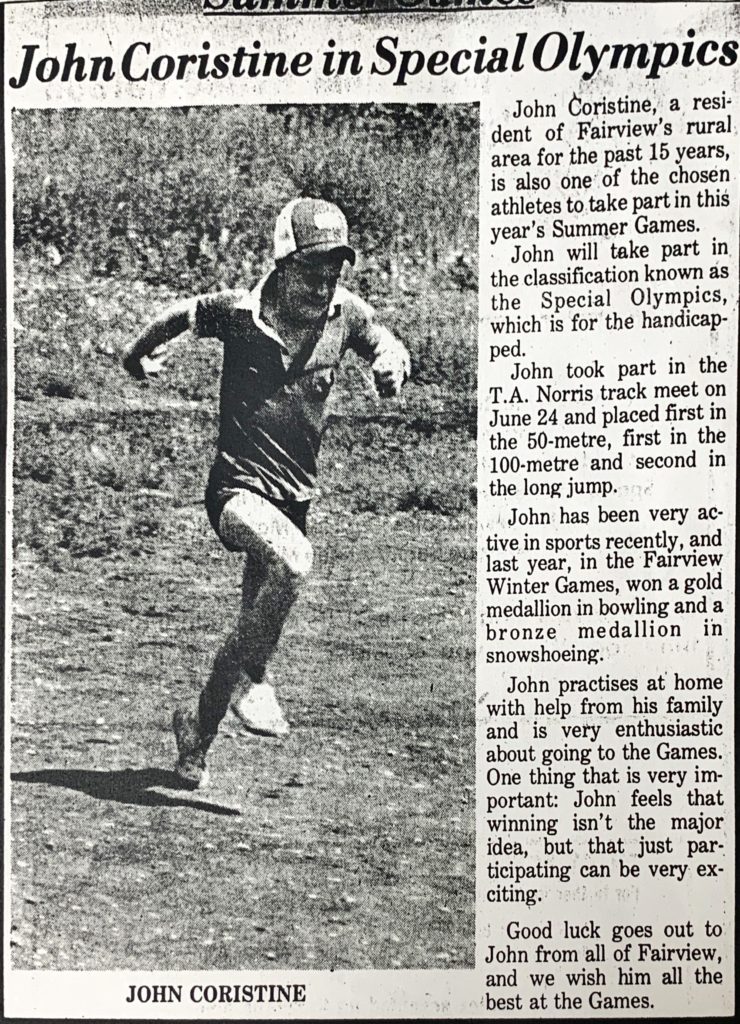
He and his family made the decision for John to receive supports in 1986 when he was 18 to allow him to live more independently with friends and mentoring. John’s sister says her brother was excited to move into an apartment with a roommate. He was also supported in getting a job which was important to him.

Eileen says their mother made plans for John to receive supports because she felt if he would have stayed at home, he may not have had the independence and self-esteem he is known for.

You may be familiar with John, he was affectionately known as the Cowboy Guy in Peace River, making friends everywhere he went.

When it was time to transition John from the Independent Living Supports program, Eileen says John and his family felt like they were a part of the plan which helped everyone start the next chapter in their lives.

Eileen says the supports her brother received from Care over the years was the stability he needed. There was and continues to be someone always around who understands and helps him day-to-day.

Did You Know – John represented the region in the Special Olympics!

Our Stories: Ron Good

Ron is one of our Recreation Coordinators at our DSL facility Stone Brook who is widely and affectionately known in Chinese watch and clock circles by his nickname “Bethune of the Watch Industry”.

Ron Good began his work with Care (ASLS)  on March 1, 2012 as a Casual Community Support Worker, working overnight shifts at the Peace River I residence. He transitioned to a Full Time position as a Community Support Worker in September of that year.

He remained a Full Time night shift CSW, working at both PRI and PRII until the late summer of 2017, then assisting with the company’s HR department as a Coordinator, until the spring of 2018.

That spring, he returned to his position as a Community Support Worker, initially as night staff at the Berwyn residence and later, working also days or nights, at both PRI and PRII as needed.

During the summer of 2018, Ron was tasked with a specific full time project: finding additional appropriate candidates for the CSW positions at our residence in Berwyn, working with a very challenging Complex Needs resident. By the end of that summer, the Berwyn residence was fully staffed with suitable employees, many of whom are still employed with the Care.

In October of 2018, Ron accepted the Residential Coordinator position at the Berwyn Residence. Ron continued in that position until taking a medical LOA in March of 2020.

On his return to work, Ron was offered and accepted a new position as Recreation Coordinator at Stone Brook. He now works primarily for the PDD side, but also cooperates with the Recreation Coordinator for the DSL side, ensuring a full slate of recreation activities for all residents of the facility.

Ron has an active community life apart from his work with Care and, even though his brother Don also resides in the Peace River area and he has many friends here, ‘community’ might best be seen as world-wide.

In 2008, Ron became interested in the history of wristwatches and clocks in The People’s Republic of China, a history that had – until that time – been almost entirely overlooked by anyone in the West. Since then, Ron has amassed a leading Western collection of Chinese timepieces, mostly wristwatches, as well as a substantial collection of associated ephemera, parts, tools, and historical documents.

Since 2011, Ron has visited China six times, for a month each time, meeting industry pioneers and leaders, executives and workers, and collectors and educators across that county.

In 2014, Ron became the first non-Chinese person with a membership in the China Horologe Association (the governing/coordinating body for the Chinese timepiece industry). He is now recognized by the Chinese government, and known in the greater Chinese horological community, as the prominent Western historian on this subject. Hosted and provided hospitality by the CHA, he’s visited numerous factories and museums, and attended China’s most respected watch and clock industry expositions and summit meetings.

Ron’s activities have appeared in local newspapers, but also in the Financial Times and he’s also been featured in Chinese TV, radio, magazines and newspapers. He is very widely and affectionately known in Chinese watch and clock circles by his nickname “Bethune of the Watch Industry,” after Norman Bethune, another widely known Canadian in China’s history. His own related website is amchpr.com, for those who’d wish to see his collection, his travel writing and photography.

In 2020, scholars at the Oxford University Press asked Ron to contribute a section for an upcoming scholarly text “A General History of Chronology” (edited by Anthony Turner, James Nye and Jonathan Betts), covering the entire history of world time-keeping. Ron collaborated on the section covering China’s development from 1900 to the present day. The book is to be released in 2021 and will also include Ron’s photography.

Ron will be 70 years old in June 2021.

1 2 3 6