We are celebrating National #AccessAbility Week, a week dedicated to inclusion and accessibility in Canada, by sharing with you the contributions our Individuals make in our community.
In Peace River, we own and operate Golfworld on the Peace, which employs Individuals in our service. The mini-golf course has been in operation since 1996.
Our ILS (Independent Living Services) program has numerous Individuals in the workplace including one gentleman who, for over 15 years, has been employed by Rocky Mountain Equipment in Grimshaw.
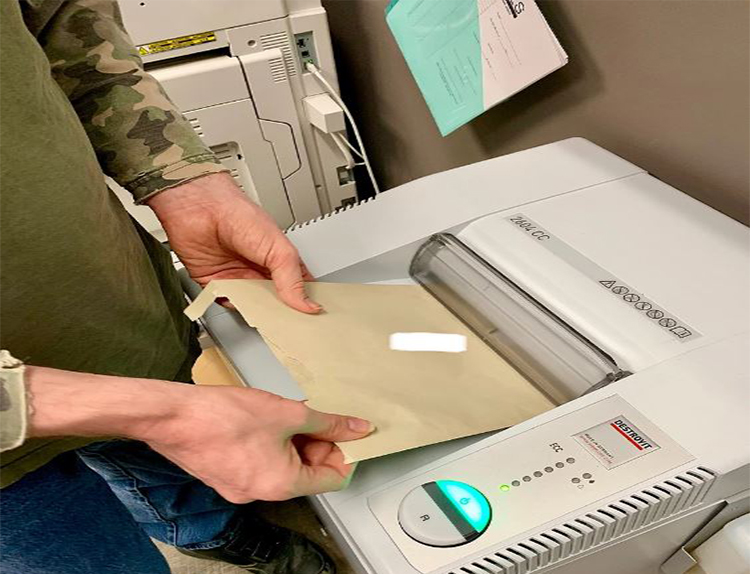
At the Grande Prairie office, we have one Individual that comes in once a week to shred documents, and twice a week another Individual helps with trash removal.
We are also proud to say that we celebrated the inaugural National Access Awareness week in 1988.
An excerpt from North Peace Community Living Society’s History Book revised 1994
Our Mission is to provide quality services to Individuals with diverse needs by encouraging opportunities for Growth, Development and Community Support.
Recently, our Behavioural Program Team completed its quarterly review and we would like to share the results.
But before we get into the details, our Behavioural Program Supports Coordinator explains how the team supports our Individuals and their CSW’s.
“The Behaviour Support Team assists our frontline staff in understanding and getting to the ‘why’ of a behaviour. We do this by collecting data and information and then teaching new skills to both the Individual and the Community Support Worker (CSW). We create plans to help that process like BSP’s, Protocols and Individual-specific training. We provide coaching and on-the-floor support with the goal being that the CSW will acquire the skills to meet challenging behaviours head-on,” explains Jen Drummond.
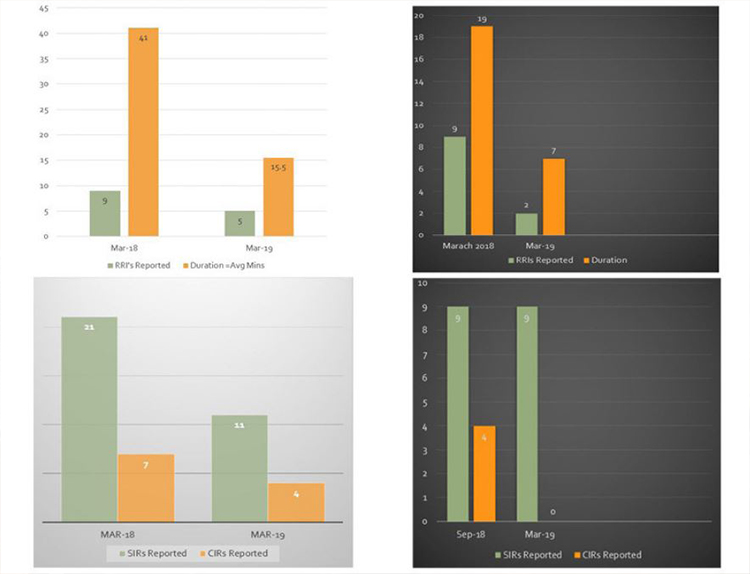
The data collected shows a decrease in Record of Restrictive Intervention (RRI), Critical Incident Reports (CIR) and Serious Incident Reports (SIR) for two of three Individuals in our Saskatoon Lake group.
Data collected from two Individuals
One of our Individuals living at our Saskatoon Lake property saw SIR/CIR increases which have been attributed to numerous triggers. Those factors have since been identified and rectified including a change in staffing.
The team anticipates further RRI, CIR and SIR decreases for these Individuals in the future.
Jen and the rest of the Behaviour Support Team would like to extend a big THANK YOU to the Community Support Workers, Residential Coordinators and Team Leads who have put in all the hours and effort and often blood, sweat and tears, into our Individuals. YOU are the reason we’ve seen some amazing successes over the last year! Way to go, team!!
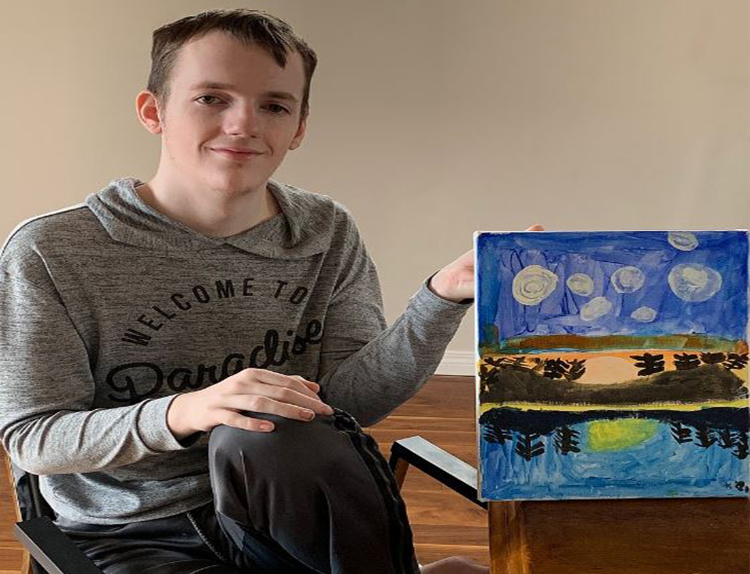
This week we are turning our focus to one of our Individuals in Peace River and the official unveiling of his painting Reflections.
18-year-old Kiefer has discovered a new talent and is starting his journey as an artist. He says he was inspired by a fellow churchgoer “and how she looks at things and her paintings.”
Kiefer has been painting for a few months and is very proud of his first creation he has called Reflections, saying “It looks amazing!”
Kiefer shares that he will be taking lessons in the future, to further refine his talent. When asked if he knows what he will paint next, Kiefer says he will “wait until I have the proper teacher to teach me to further my painting skills.”
He wants to share his artwork with the community and looks forward to creating more pieces to be displayed in our Peace River and Grande Prairie offices and maybe some other locations in his community.
Positive programming, in nerd speak, is “the longitudinal instruction designed to teach skills and competencies to facilitate behavioural change.” – Institute for Applied Behavioural Analysis.
That’s a mouthful, let me translate…
Positive Programming means teaching new skills and abilities over time to replace behaviours of concern.
There are two keys words in that sentence: teach and replace.
The Individuals we support are very complex people with complex histories and often there have been significant gaps in their learning. When we develop protocols, we do so based on those gaps. What skill does this person need to achieve greater wellness and greater independence? Perhaps there are a number of smaller skills they need to learn before they can succeed at the desired goal. If that’s the case, we may design a protocol to address those smaller skills in order to build towards something bigger. A great example is taking place out at Saskatoon Lake. Using a visual (picture aided) communication system, we are working towards enhancing communication. Now, if we simply handed an Individual cue cards and said, “Here, use this,” without teaching them the basics that we know are lacking, like how to say “no” to something, then we’re not likely to be very successful. Programs build one upon the other and the role of the Community Support Worker (CSW) is to provide the Individual with consistent teaching so that they have a good foundation for the next step. Consistency is incredibly important in this process. If a protocol is only followed some of the time, it will delay an Individual’s learning.
When we consider protocols and programs for the Individuals we support, we have to ensure that we are meeting the needs of the Individual respectfully. This is why we teach with positive reinforcement. When someone is rewarded for positive behaviour (a thumbs-up, a sticker, one-on-one time with a favourite CSW), they’re more likely to want to perform that behaviour again. And who wouldn’t!?
Punishments for behaviours of concern are not part of this process. Though a punishment may result in a quick decline in the behaviour of concern, it simply doesn’t work in the long run for the Individual. This is because the Individual may not be able to understand why they are being punished. Also, punishment doesn’t teach an alternative to the behaviour of concern.
This leads us to the second part of the definition of Positive Programming: Replace. Once we’ve identified the behaviour of concern, we look at its function. The “why” behind the behaviour. If someone is hitting because they find a task too difficult, but don’t have the means to express this, we need to look at offering alternatives to hitting. What can we teach that satisfies that function? Well, that all depends on the person. Perhaps we teach them how to exchange a “Break” card with their CSW when they feel overwhelmed by a task. Maybe we teach them the sign for the word “No” or “Break” so they can express themselves in a more functional and less harmful way. Once we teach an Individual an alternative behaviour, we encourage and reward them every time they use it.
It is Emergency Preparedness Week and we wanted to share with you how ASLS has prepared our Individuals in case of emergency.
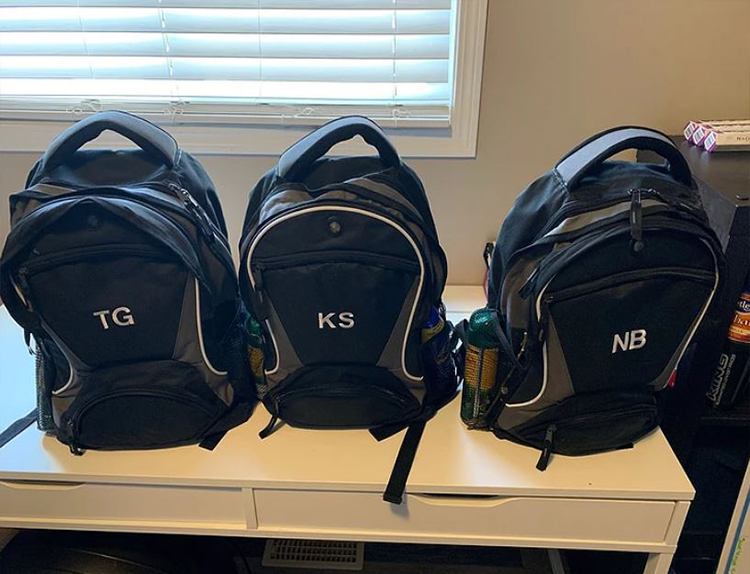
Each of our Individuals has an Emergency Backpack/Health and Safety Bag at the ready. This backpack accompanies our Individuals each time they leave their home.
Inside each backpack is some basic items, dependant upon the season, to help us through an unplanned event.
Currently, the bags have sunscreen, insect repellant, a whistle, bottled water, bear bells, emergency blankets, energy bars or fruit snacks, hand warmers and a first aid kit.
The bags may also carry personal items and small toys or activities specific to our Individuals.
“Often the key to preventing an unplanned event from turning into an emergency is response time. Preparation, speed, and clear thinking are critical. The safety of our Individuals, employees and the public is paramount,” says Cori Freemark, ASLS Health and Safety Coordinator.
“I think the biggest thing I can say is no matter how well thought out an Emergency Plan is, or how much food or water you have ready, it’s only effective if you can act on it which is why practice is so vital. People really need to commit to preparing and follow-through,” adds Cori.
Cori recommends visiting the Government of Alberta website as it has some very practical resources as well as a Personal Preparedness course that is available for free online.
We would again like to thank the following businesses that helped us ensure our Individuals are prepared.
Thanks to:
– Sierra Safety Supplies and Rentals for a great discount on emergency supplies
– Hivolt Safety for donating the backpacks
– EmbroidMe Grande Prairie for a great discount on the embroidered initials
This is Glory Przekop’s story, our Marketing Coordinator
I started with ASLS this past November, going from journalist to marketing coordinator. I decided to make the change because I wanted to combine both my careers in life.
Previous to working in newsrooms/radio stations across the province including here in Grande Prairie (Q99), I worked as a Rehabilitation Practitioner in Edmonton. I am an IBI/ABA trained therapist and have worked with autistic children in their homes as well as in their schools as a TA. I also have experience working with at-risk youth.
In my personal life, I am a wife, mother of two and a volunteer, sitting on the Saskatoon Lake Ag. Society board. In my younger years, I did a wee bit of travelling and spent some time living and working in the UK with my sister.
I am thrilled to be embarking on this new adventure with ASLS and discovering all the lives impacted by this organization that has been around for 50 years. In the future, you will hear and see more about that milestone as I gather stories and share them with all of you.
Quick facts about Glory:
– I am fluent in sarcasm
– I am a Calgary Flames fan
– I heart coffee
– I grew up on a farm, the oldest of 4 and now live on an acreage in the County of Grande Prairie
A few ASLS team members have returned from an HR conference in Edmonton.
Senior Leadership, as well as two managers and our HR Team Lead, spent a couple of days taking part in numerous sessions at the HR Undefined Conference.
• Conducting Workplace Investigations – The Right Way
• Preparing for the Future of Human Resources
• Harassment is a Hazard and other OHS Changes in Alberta
• Create a Gossip Free Workplace
• Moving Beyond Performance Management
• Overcome, Overwhelm and Accelerate Your Results
• The Resilient Leader
• Cultivating Leadership – Stimulating Ideas and Passion
There was also a Trade Show where our team members were able to speak with several vendors and some ideas of ensuring efficiency and effectiveness are being explored.
The most ‘hands-on’ session came during a team-building activity that saw our team roll up their sleeves and Get Cooking! Our chefs prepared a couple of different Paella dishes that tasted even better then they look!
This is Liz Merlo’s story, our Director of Support Services
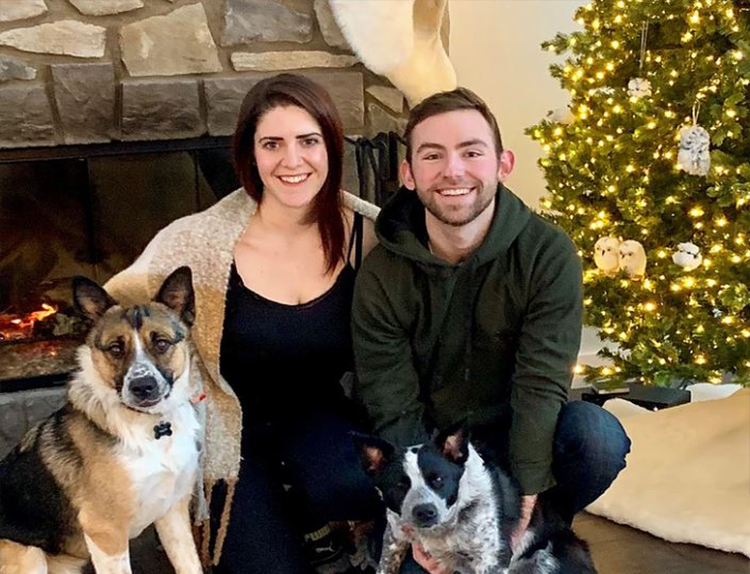
Liz grew up in Midhurst, Ontario about an hour and a half north of Toronto, and is from a large, loud (her words) Italian and Irish family. She is the second youngest of four children and has been married for a year and a half. She lived in Victoria for almost 6 years while she completed her education, attending both University and College. She relocated to her husband’s hometown of Grande Prairie just over a year ago and loves the small-town feeling compared to larger cities she has lived in like Calgary. One of her and her husband’s first priorities after buying a house was adopting rescue dogs, she currently has two mix-breed dogs, Happ and Gracie, who were rescued from the Grande Prairie Pound and Bandaged Paws. You may catch them visiting the office occasionally, and they love any attention they can get. Liz has been with ASLS since October 2018 joining as the Support Services Manager and recently promoted to Director of Support Services.
Why did you apply to work with ASLS? “I was very interested in working in the not-for-profit industry again, with a specific focus on social assistance and healthcare, and ASLS sounded like the perfect fit”
Why do you stay? “This has been the most challenging but most rewarding job I have ever had. I enjoy coming to work every day to work alongside people who are so passionate, dedicated and hard-working to help the individuals we serve. I appreciate the adaptability of ASLS and am truly excited to be a part of its future.”
How does Liz self-care after a stressful day? “First priority when I get home every day is to get a big hug and snuggle from my puppies, they are always so happy to see me it’s hard not to smile and be happy with them around. My husband and I have recently built a home gym, so we try and utilize it every other day. We also really enjoy cooking together, my favourite is cooking Italian. My love of cooking came from my Nona when I was young, she would give me and my siblings two options: cook or clean. I always chose cooking so I could taste test before dinner and then hit the couch after! Luckily, my husband shares my love of cooking, so we like to spend a good amount of our evening in the kitchen trying out new recipes or recreating some of our favourites. My other way to relax is to take a nice hot bath and settle down with a good book. Currently, I am reading some books by Patrick Lencioni titled ‘The Ideal Team Player’ and ‘Death by Meetings’.”
What is your hidden talent? “No hidden talent comes to mind, but what people are sometimes surprised about when they come to my house is how many house plants I have. There are probably close to fifteen in my living room alone. To the chagrin of my husband, I find myself bringing a new plant home every few weeks, but I argue that’s better than bringing home a new dog or cat! So, I guess you can call me a Crazy Plant Lady, and a green thumb is my hidden talent. I wish I could have more around my office, but without the natural light, it is harder to find the right plants. I’m always on the lookout, though!”
Anything else to share? “If you’ve been around the Grande Prairie office at all you may have noticed I LOVE shoes, and you’ll probably always find me in some type of heeled shoe, no matter the activities of the day or how much snow is on the ground. I also love when there is a puzzle or challenge. I recently tried out Trapped with some friends, and now my husband will have to put up with me asking to go every week. I like when people ask me challenging or difficult questions. I have a lifelong passion for learning new things, and I have found there is not a shortage of that here at ASLS!”
Today we say good-bye to a few of our programs at ASLS.
The Brain Injury Supports, Community Access for People in Continuing Care (CAPCC), and FASD Support Program/ Parent-Child Assistance Program (PCAP) programs are moving under the umbrella of other local service providers.
“It was a fantastic experience over the past decade to be involved with the programs and to be a part of the successes and growth of the Individuals accessing those supports throughout the region. We are confident that our colleagues at Blue Heron and the agencies will continue the work and facilitating those success stories, and we appreciate their interest and willingness to take on these contracts as ASLS turns its focus to providing 24/7 residential supports to Individuals with Complex Needs.” – Rilla Websdale, ASLS CEO
“We have seen a lot of amazing progress and changes in the individuals that we have served throughout the years. I always tell our brain injury clients that they are my heroes because I get to watch them as they’re persistent and resilient and working through phenomenal incredible life-changing things to make themselves the best that they can be now. And although we will no longer be with ASLS, which has been our home for a good many years now, we will continue to work with the individuals who are part of our programming now and the new individuals who will come in the future to do the very best that we can do to support them to be the very best that they can be. Working at ASLS been has been a lot of fun. We have had a lot of good staff through the years and a lot of very incredible amazing individuals.” – Laurel Christensen, Brain Injury Team Lead
Leading up to today, all current clients in these programs, as well as their legal guardians, were made aware of and involved in the transition to different service providers.
Thank you to all the staff over the years who provided guidance and support to the many Individuals involved in these programs. Your dedication and passion not only inspired the Individuals, but co-workers as well. Thank you.
Just over 18 years ago, Ruth Styles stepped off a plane hailing from the United Kingdom and into an interview room for a position as a CSW within ASLS.
“When I started on July 7th, 2000, I had only been in Canada for less than a week. I was still jet-lagged! I had my interview at 4 pm on the 6th and I started at 7 am the following morning,” recalls Ruth Styles.
At that time, ASLS only operated in Peace River and Grimshaw and had just opened its second group home in Grimshaw. “I attended a strategic planning meeting. The CEO (Shannon Websdale), all the board members and all the staff could fit in a small kitchen.”
ASLS also had far less technology, “the only computers belonged to the accounting and admin persons. Everything was handwritten – logs, incident reports, med incident reports, file notes. The first computer at Wilcox didn’t arrive until a couple of years after I started. It wasn’t Microsoft it was this horrible thing called a Corel and it had floppy discs!”
After her promotion to working supervisor of Wilcox cottage, ASLS sent Ruth to a year-long supervisory course. “That really helped me early on in my experience because in England I worked as a nurses’ aid – never in a supervisory role. That was the best thing they did by putting me on that course.” Ruth recalls, “It was the first time I learned about paradigms. Learning about paradigms is huge as a supervisor dealing with people because it is the way someone views the world. We all work within a certain paradigm. I really liked learning about that.”
During the course, Ruth was able to expand her own paradigm, “The most impressive thing was that they taught that to be a good supervisor, you have to be a good leader – and a good leader is someone who draws people to them and leads by example. Coming from England, I thought to be a supervisor you had to be like the teachers at school – strict, and horrible, and unapproachable. You just tell people what to do. That whole year came down to you inspire people. You’re a good leader if you inspire people and lead by example and I thought, Oh! Perhaps I can be a supervisor because that’s me!”
It turns out Ruth was right as she maintained her role as a working supervisor at Wilcox for 12 years and successfully advocating the inclusion of palliative care for ageing Individuals in Wilcox. Since her time at Wilcox, Ruth has occupied many roles within ASLS including Team Lead, Acting Manager of Stone Brook, Quality Assurance, Accreditation Coordinator, and CAPCC Coordinator. Learning new skills and growing and evolving with each role much like ASLS has over the years.
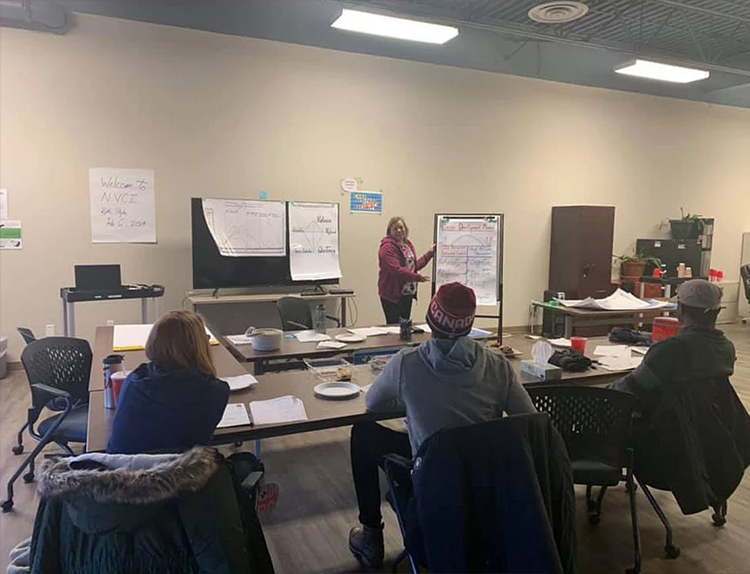
Currently, Ruth works as a coordinator in ASLS’ Brain Injury program in addition to running staff training courses such as NVCI and Abuse Protocols.
Terry Weber has been with ASLS as a PCAP Mentor (the Parent‐Child Assistance Program) for two and a half years working out of Fairview and Grimshaw.
She recently lost her husband and would like to thank everyone for being so very supportive during his lengthy illness.
In April of 2018, Terry’s husband became sick and was admitted to an Edmonton hospital. Treatment lasted for six weeks and during that time they were advised to call family in on three separate occasions.
“He was supposed to have died three times but pulled through,” Terry shares.
He was later released from hospital and it was at that time the couple moved to Fairview.
This past December he became ill again and passed away after being treated in hospital for three weeks.
Terry says during the months of his illness and following her husband’s death, her co-workers have been nothing but supportive.
Specifically, Madonna, Kristen and Sharon who work directly with Terry.
“They helped look after my clients and made sure I didn’t feel like I was neglecting my job because I couldn’t be there.”
In the third installment of Our Stories, we sit down and get to know Terry Weber
Thank you, Terry, for sharing your story with us and thank you to all who have and are still supporting Terry through this difficult time in her life.